The Black Belt Is Atlantis
I went to the cotton fields in Newbern, Alabama, mostly out of curiosity.
My great-grandmother was a sharecropper. My family still has land here. I've been spending time in this part of Alabama, learning about the place, looking into our history, and trying to understand more about the ground beneath my feet.
I wanted to see the fields for myself.
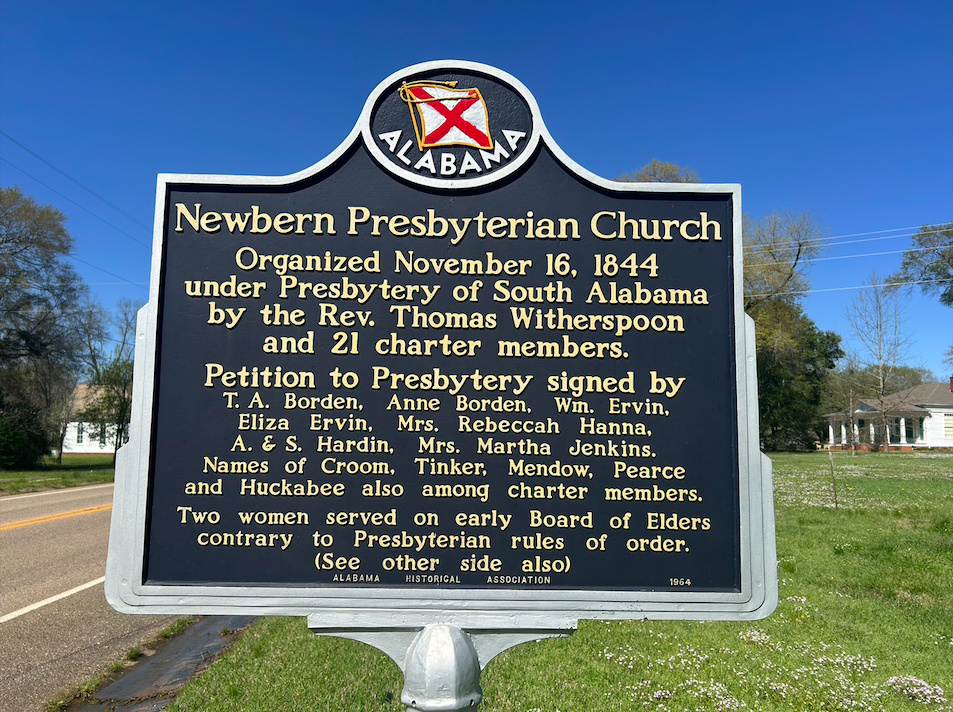
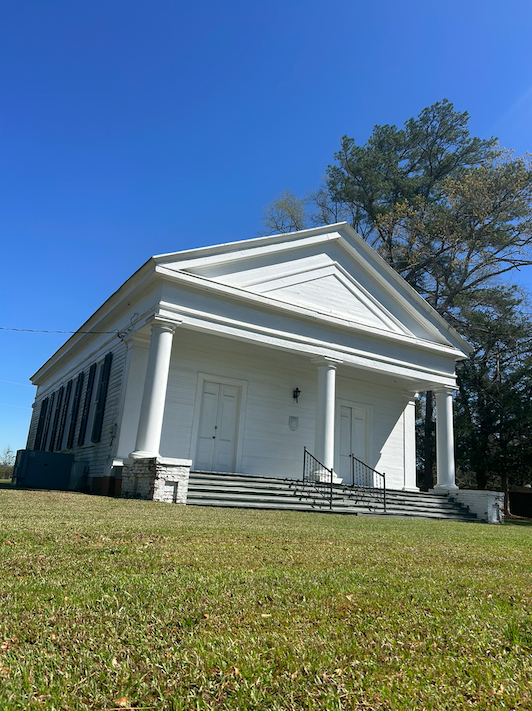
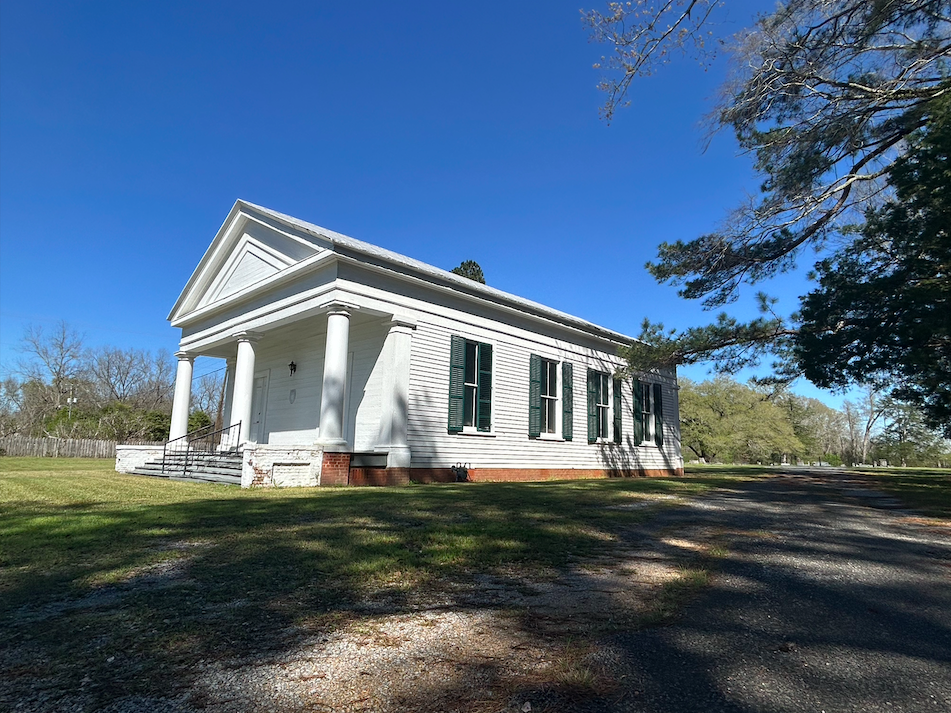
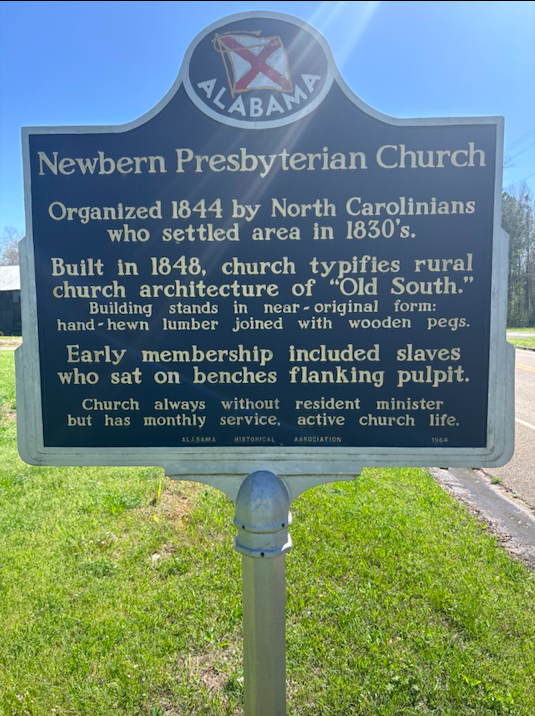
I took pictures. I looked at the landscape. I visited the Newbern Presbyterian Church, which was organized on November 16, 1844, by the Reverend Thomas Witherspoon. The church wasn't open when I visited, but its history was waiting outside in a historical marker. I read that the congregation's early membership included enslaved people who sat on benches flanking the pulpit. I also learned that two women had served on the early Board of Elders, contrary to Presbyterian rules of order.
I kept thinking about those details together. Women exercising authority where the rules said they shouldn't, and enslaved people present in the same institution without the same access to power.
One place, multiple realities. Authority granted to some, withheld from others. People living within the same system, but not experiencing it in the same way.
I wanted to know more, so I walked through the cemetery behind the church.
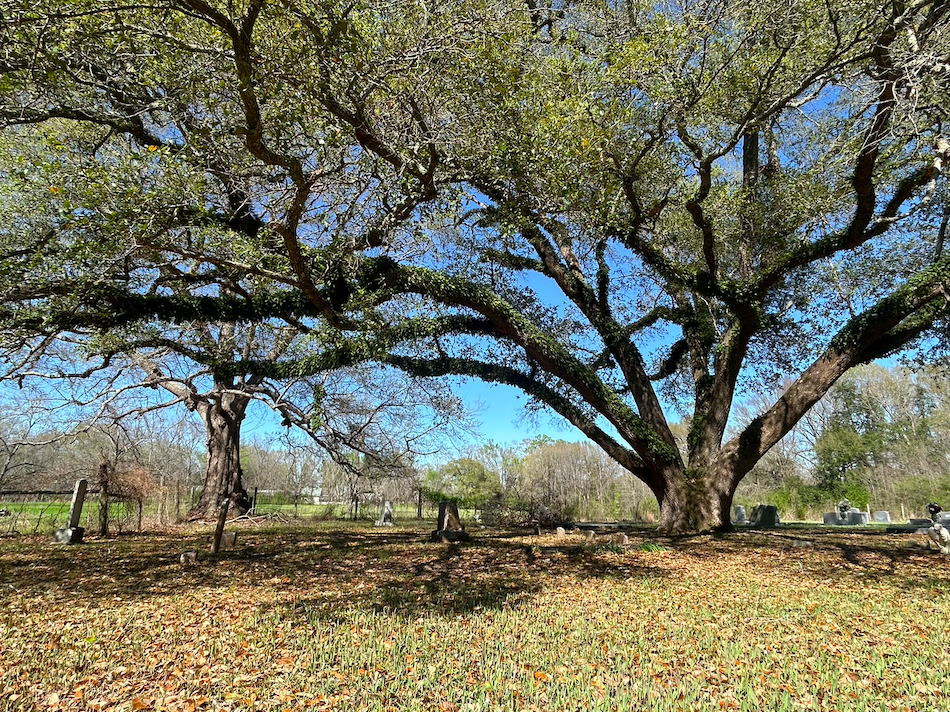
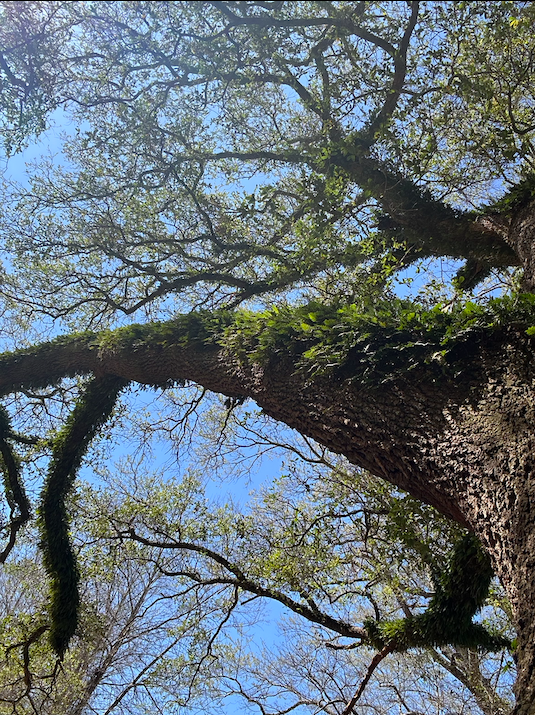
I took pictures of the trees. I looked at the headstones and wrote down names that caught my attention.
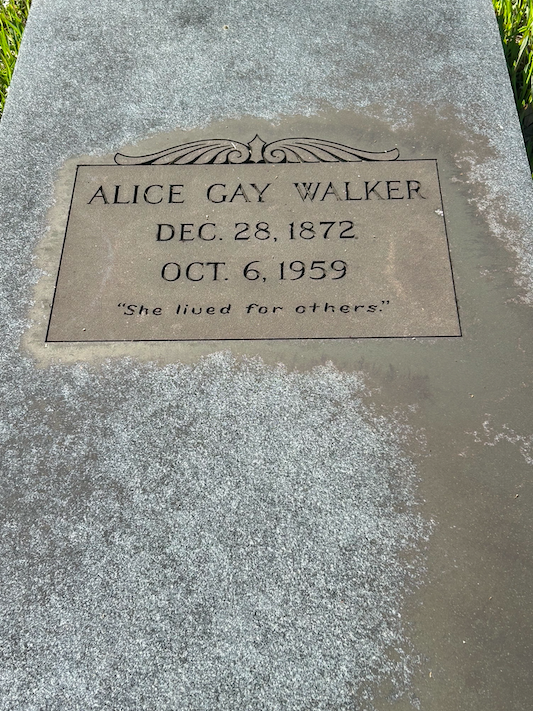
Alice Gay Walker. December 28, 1872–October 6, 1959.
Her headstone read: She lived for others.
I don't know her story yet. I don't know what she wanted for herself, what she loved, what she worried about, or how she understood the life she'd lived. I only know that someone chose those words to represent her, and standing there reading them felt both beautiful and sad.
She lived for others.
There is so much tenderness in that sentiment. There is also a question I couldn't quite shake.
What did it mean for Alice to live for others? And what did the people around her understand about the life she lived for herself?
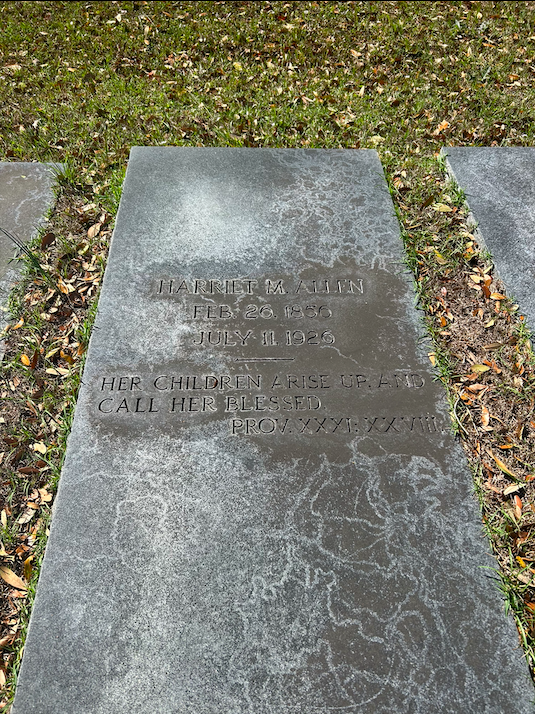
I thought about Harriet M. Allen, whose headstone read: Her children arise up and call her blessed.
February 26, 1856–July 11, 1926.
As someone who loves mothers and believes wholeheartedly in supporting them, those words meant something to me. There's something beautiful about the idea of children recognizing their mother's care and rising to honor her. There's a kind of gratitude in that inscription that I find moving.
But I also found myself thinking about the labor underneath that love. The feeding, the tending, the watching, the worrying, the countless ordinary acts of care that make a childhood possible. The work that can be so essential to a family that people stop noticing it is work at all.
I don't want to flatten either woman's life into a lesson about labor. They were people, not symbols, and their stories deserve to be known on their own terms. Still, their inscriptions stayed with me because they touched something I've been thinking about for a long time: the way women are remembered for what they do for other people, and how easily the woman herself can disappear behind that devotion.
I walked away thinking about the women whose names I had written down, and about all the women whose names I hadn't found.
And then I thought about my own family.
My great-grandmother, Mary Lou Ash, is buried on our land. So is my grandmother, Priscilla Ashe.
After visiting the church and the cemetery behind it, I went to the cemetery on our land. I was no longer looking at the history of a place through a marker or a stranger's epitaph. I was standing among my own people.
My great-grandmother was a sharecropper.
And then, because apparently the Black Belt wasn't finished giving me things to think about, there was the old cotton gin, the creeks, the drainage structures, the open fields, and the clusters of trees. The gin had signs reading “Continental Ginning System” and “Continental Golden Comet System.” I also came across a large bell dated July 4th, 1868. I don't yet know the stories behind those details, but I wrote them down. I want to know more.
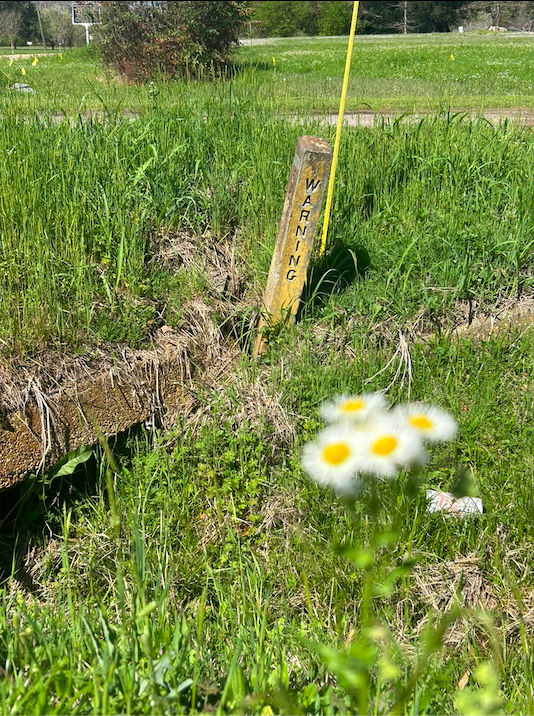
Everywhere I looked, there were traces of decisions made long before I arrived. Some things seemed ancient. Others looked deliberately engineered around conditions people had learned to anticipate. I found myself paying attention to how everything fit together: the land, the water, the roads, the buildings, the machinery, and the labor that made the local economy possible.
And then I found a seashell.
In a cotton field.
And I brought it home for my altar.
I joked with my mother that I consider the Alabama Black Belt to be Atlantis. And the more I think about it, the less I feel like abandoning the comparison.
Long before cotton fields, churches, and roads, this region was covered by an ancient sea. Marine deposits accumulated over millions of years, eventually contributing to the chalk and soils that characterize parts of the Black Belt today. The land that became so valuable to cotton agriculture carries evidence of a world that existed long before the one we recognize.
I find that extraordinary.
The Black Belt has always seemed to me like a place where the visible world is only part of the story. Beneath the present landscape are older landscapes, older histories, and the consequences of decisions made across generations.
The shell was a small thing. I don't yet know its precise geological history, and I don't need to pretend that I do. What mattered was finding it there, in that field, while thinking about my family and the people whose labor shaped this region.
I was holding a physical reminder that the world beneath us has its own history, much of which existed before we had any idea to look for it.
And I was standing on land connected to my own family's history.
My great-grandmother was a sharecropper. My family still has land.
I keep returning to those two facts together.
After emancipation, sharecropping became one of the systems through which Black agricultural workers continued to labor under deeply unequal conditions. Debt, dependence on landowners, restricted choices, and unequal access to resources could keep families working without allowing them to accumulate the security their labor should have made possible.
The end of slavery did not mean the end of exploitation. The systems changed, but the people doing the work could still find themselves with very little control over the conditions under which they worked, the value they received for that work, or the future their labor would make possible.
And yet, my family has land.
And I don't want to romanticize that. Retaining land doesn't erase the conditions under which previous generations lived, nor does it mean that Black families who lost land somehow failed to preserve what mattered. Black landownership has been threatened by discriminatory practices, economic pressure, forced sales, and other barriers for generations.
But there's something meaningful about knowing that my family remains connected to this place.
I'm still learning the specifics of our history. And I don't want to fill gaps in the record with assumptions or turn my great-grandmother into a symbol at the expense of her actual life. I want to know more about her, about the land, and about the people who lived and worked here. I want to understand the circumstances of their lives without allowing those circumstances to become the only story told about them.
I want to remember them as whole people.
And I keep coming back to a question:
What do we owe the women whose labor made our lives possible, and what should the women who come after us be able to expect?
I've been carrying that question into my work for a while now, although I don't think I fully understood how far back it reached until I came home.
For nearly fifteen years, I've worked in childcare, including private household and travel positions. I've cared for babies, supported families, helped establish routines, navigated emergencies, and taken responsibility for children's well-being in environments where the demands on a caregiver can be enormous.
Domestic work is skilled work. It requires judgment, knowledge, emotional regulation, adaptability, and the ability to anticipate needs that other people may not even recognize. It asks a person to enter the intimate life of a household and become responsible for work that is deeply personal to the people receiving it.
That intimacy can be beautiful. It can also make the conditions of employment harder to see clearly, especially when the workplace is someone's home and the worker's private life becomes entangled with the job.
Housing may depend on employment. Financial stability may depend on keeping an employer satisfied. Professional opportunities may depend on the opinions of people with considerable influence over a worker's future. Travel can put a worker in unfamiliar environments, far from their own support systems. Privacy and personal boundaries can become difficult to protect. And when something goes wrong, it isn't always clear who is responsible for helping, investigating, or making things right.
But a private home is still a workplace.
The fact that domestic work happens behind a closed door does not make the worker's rights any less real. Nor should the closeness of the relationship mean that a worker has to surrender their autonomy to prove that they care about the family.
These conditions deserve serious scrutiny, and they deserve more than a reminder to choose employers carefully or trust your instincts.
Because how much ‘instinct’ can reasonably be expected to protect someone when the risks are built into the structure of the job?
This is why I'm developing the Safety & Autonomy Standards™, a framework for safer, more accountable private-home employment.
The premise is straightforward: protections should be built into the structure of the work, not left for someone to seek out after something goes wrong.
The Standards look at the conditions surrounding domestic work, including clear expectations when a job changes, transparent pay and employment terms, housing and financial dependency, safety during trials and travel, privacy and surveillance, boundaries and autonomy, reporting and recourse, and accountability when the systems surrounding a worker fail.
In other words, what is a worker actually agreeing to? Who is responsible for making sure the terms are clear? What happens when the job changes after the worker has arrived? What protections exist when the worker lives where they work, travels with an employer, or finds themselves in an unfamiliar place? What happens when a worker says no? And if something goes wrong, who can they turn to without being left to navigate the consequences alone?
These aren't abstract questions to me. They're practical questions about the conditions people are asked to accept in order to earn a living.
The Standards are still developing. They draw on firsthand worker experiences, research, industry knowledge, and ongoing conversations about what meaningful protection should look like. I want the people doing the work to have a meaningful voice in defining what safe, fair, and sustainable employment actually requires.
I'm not interested in creating another set of polished promises that look good on a website but leave workers with no meaningful recourse when those promises are broken. I'm interested in what the words mean in practice, who is responsible for upholding them, and what accountability looks like when they aren't.
And I can't separate that work from the longer history of Black women's labor in this country.
Black women have worked the land, maintained households, raised other people's children, and sustained families and communities through systems that have repeatedly undervalued their contributions. Our labor has been essential, even when our authority, safety, and autonomy have been treated as optional.
We’ve tended to the land. We’ve tended to others. We’ve tended to their babies.
There’s no reason the next generation of Black women should be expected to inherit the vulnerability alongside the work.
I want girls entering this industry, particularly Black girls and women who look like me, to have more than advice to “be careful.” I want them to have something they can point to. A framework for recognizing unsafe conditions. Language for articulating their rights. Clear expectations for employers and agencies. A professional culture in which protecting a worker's autonomy isn't treated as an inconvenience or a sign that the worker is somehow less committed to the job.
I want protections to exist before someone needs them, rather than requiring a worker to fight for their worth in the middle of a crisis.
That, to me, is part of what it means to honor the women who came before us. Not simply to praise their strength, admire their sacrifices, or repeat the stories of how much they endured, but to ask what their labor should have entitled them to in the first place.
A woman can love her family and still deserve rest. She can be devoted to the children in her care and still have boundaries. She can be grateful for a job and still expect to be paid properly, treated fairly, and protected from harm. She can be exceptionally good at her work without having to prove her worth through endless accommodation.
Care should not require the disappearance of the person providing it.
I thought about Alice Gay Walker and Harriet M. Allen again. I thought about the words chosen for their headstones, and about the lives those words could never fully contain. I thought about my great-grandmother and grandmother resting on our land, and about the questions I still have about their lives.
What did they want for themselves? What did they have to give up? What did they manage to preserve? What would they make of the world I live in, and what might they hope I could change?
I can't answer those questions for them. I can keep looking. I can learn what I can about their actual lives, rather than asking them to carry whatever meaning I need them to carry.
And I can make choices about what comes next.
The circumstances that brought me to Alabama were not what I would have chosen. I've had to reckon with experiences that disrupted my sense of safety and stability and made ordinary participation in the world more difficult than I ever expected. And I'm still working through that.
But my time here has not been defined only by what happened to me.
I've spent time with family. I've been learning about the Black Belt. I've looked at old buildings, visited historic places, paid attention to the landscape, spent time with the animals, and asked a lot of questions. I've found things I didn't know I was looking for.
Spending time with the land and my family has helped me reach a place where I can begin to fight back, not just against the circumstances immediately in front of me, but against the larger conditions I've spent years trying to understand.
I think there's something grounding about seeing history in its physical form. A church marker. An old gin with signs whose histories I still need to investigate. A bell bearing a date. A creek with a carefully placed culvert. A field that has passed through generations of agricultural use. A cemetery full of names and lives I want to know more about. A seashell left behind by a world that existed millions of years before anyone planted cotton there.
These things don't explain themselves. You have to look, ask questions, find records, and remain willing to learn what you didn't know.
The same is true of labor.
We often talk about work as though the conditions surrounding it are inevitable. As though the way an industry operates is simply the way it has always operated, and the people working within it must adapt.
But conditions are created. Systems are built. Rules are written. Some arrangements are preserved because they benefit the people with the power to preserve them.
And those arrangements can change.
I keep thinking about the women who served as elders in that early Presbyterian church despite the rules of their denomination. Their circumstances were different from ours, and I don't know their individual stories yet. I won't pretend to. But the historical marker records a moment when local practice didn’t conform to the rules that were supposed to govern it.
That tension interests me: the difference between what a system says is permissible and what people actually do, between the rules that exist and the possibilities people insist on creating.
Who gets to make the rules? Who benefits from them? Who is expected to live with their consequences? And what becomes possible when people stop treating those arrangements as inevitable?
Those questions follow me from the church to the cotton gin, from the cotton fields to the history of sharecropping, and from that history into my work on domestic-worker standards.
I went to the fields because I wanted to see where my great-grandmother had worked within a system that depended on Black labor. I left thinking about what it means that my family still has land, what it means to preserve a connection to a place, and what I want to help preserve for the people who will come after me.
I don't know exactly what this work will become. I'm still gathering information, taking photographs, making connections, and learning how much I don't yet know.
But I know why I keep returning to these questions.
Because I know where the fuck I come from.
My great-grandmother's life was more than the labor she performed. My family's history is more than what was done to us. And the future of women, especially Black women, in domestic work should be about more than how much we can endure.
I want our work to be safe. I want our expertise to be recognized. I want our autonomy protected. I want the girls coming after us to inherit better conditions than the ones we were handed.
I want to leave something behind that makes their lives better.
And maybe that's what I was looking for in the fields, although I didn't know it when I went. Maybe it was there in the cemetery, too, in the names I wrote down and the words carved into stone. Maybe it was there all along, in the questions I've been asking about who gets protected, whose labor is valued, and what we owe the people whose work has made our lives possible.
I found a shell in the dirt and brought it home. I'm still learning what it is, what it can tell me, and how long it has been there.
I'm still learning about the women whose names I know, the women whose names I haven't found, and the women whose lives made mine possible.
And I'm still asking what we owe them, and what the women who come after us should be able to expect.
The Black Belt is Atlantis, I told my Mom.
I think I meant that the world is older than we know, that what survives deserves our attention, and that there are histories beneath our feet waiting for us to look closely enough to recognize them.
Some of those histories are written in stone. Some are buried in the ground. Some survive in family stories, old records, and the work people did without ever being told that the work itself would become history.
And some of them are still unfolding.
I'm still learning, and looking.
And I know what I want to do with what I find.