Placement Is Not Protection
I've been trying to explain something for a long time, and I think part of the problem is that people keep hearing me ask for empathy when what I'm actually asking for is understanding.
I don't need everybody to feel bad for me. I need people to understand what I'm talking about. I need them to look at the structure of this industry, at the relationships it creates, at the power people hold over one another, and ask themselves why so much of this is considered normal.
I've spent nearly fifteen years caring for other people's children. I love this work. I love the little things, the discoveries, the routines, the questions, the trust a child places in you. I've built my professional life around understanding children, supporting families, and creating environments where children can feel safe enough to grow.
I take that responsibility seriously. I've worked hard to become good at what I do, and I know the value I bring to a household.
But a family's home is also a nanny's workplace. And the fact that it is someone's private home does not make it any less of a workplace, nor does it make the person employed there any less deserving of safety, dignity, and autonomy.
This is where I think the industry has a problem.
We expect nannies to be professional. We expect discretion, flexibility, emotional intelligence, sound judgment, and the ability to navigate difficult situations without disrupting the household. We expect them to understand the family's needs, accommodate its preferences, and remain composed when circumstances become uncomfortable.
But what do we expect of the people employing them? What do we expect of the agencies facilitating those relationships? And what happens when the worker is the person who needs protection?
These aren't hypothetical questions for me.
I was twenty when Barack Obama was elected president (and I promise, this story has a point). I was in Grant Park in Chicago when he won, and I went to Washington for his inauguration. It remains a beautiful memory for me, one connected to a moment of collective possibility for Black people.
Years later, while caring for a toddler and an infant of Jewish descent, 'Bauba', their maternal grandmother, made racist comments directly to my face. She said that if people voted for Obama the first time to prove they weren't racist, they'd have to vote against him the second time to prove they weren't stupid. She also argued that worse had been done and said to Jewish people than anything done or said to Black people. And I'm not paraphrasing.
I remember the indignity of standing there while someone took a memory that meant so much to me and treated it as a punchline, while making clear what she thought of people like me.
And I remember the position I was in. I still had a job to do. Stuart and Meira still needed their nanny. Their parents still had to work. What was I supposed to do? Who would I tell? What would happen if I did?
I had no reason to assume that speaking up would change anything. I couldn't simply stop being their nanny because an adult in the household had made it clear that she did not respect me. I had to consider the consequences of challenging someone whose behavior I had no authority to control and whose presence I could not necessarily avoid.
So I carried on with my work.
I loved those babies. I took Stuart to see Chicago artist Hebru Brantley's Parade Day Rain at the Chicago Cultural Center because I wanted to share art that I loved with him. I even made a cake inspired by the painting, with Hebru's permission to use the artwork as my reference. I was bringing my interests, my culture, and my curiosity into the children's lives, as nannies do when we give children more than the tasks listed in a job description.
I was trusted to help care for their children and contribute to their world. But that trust did not guarantee that I would be treated with dignity in the world where I worked.
I did my job. I cared for those babies. And I learned that being professional does not protect you from what can happen behind closed doors. Sometimes it simply means you are expected to carry on as though nothing happened.
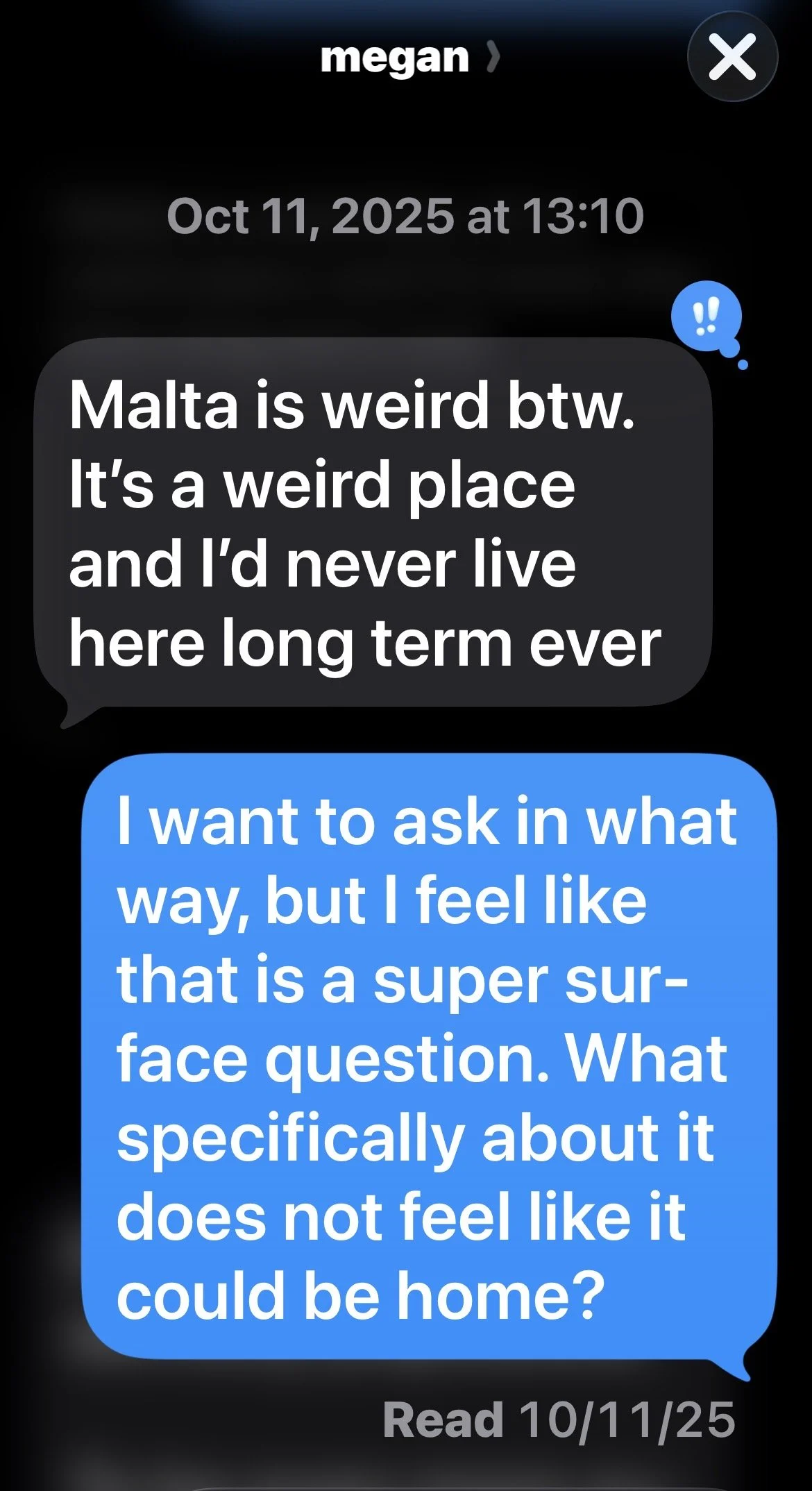
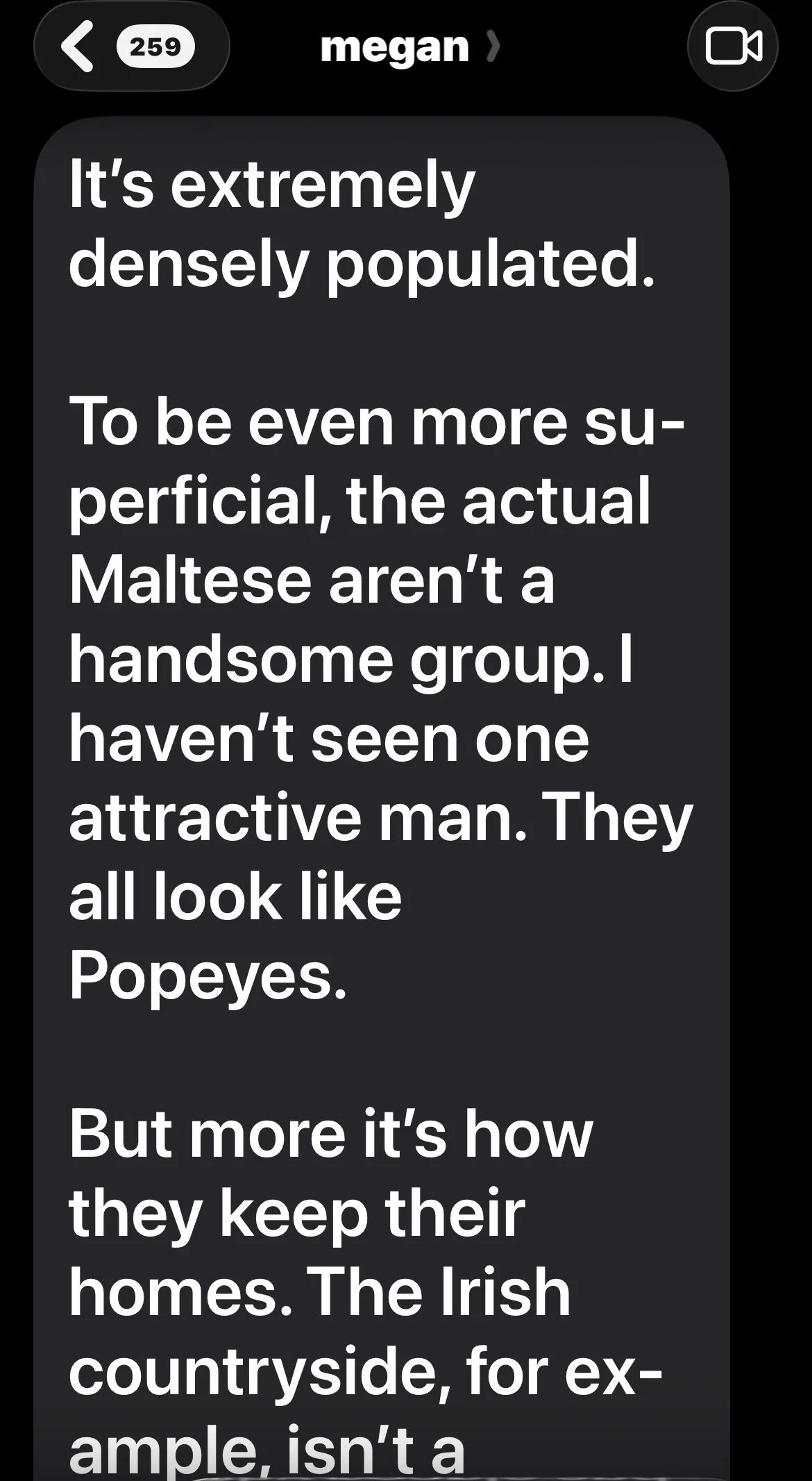
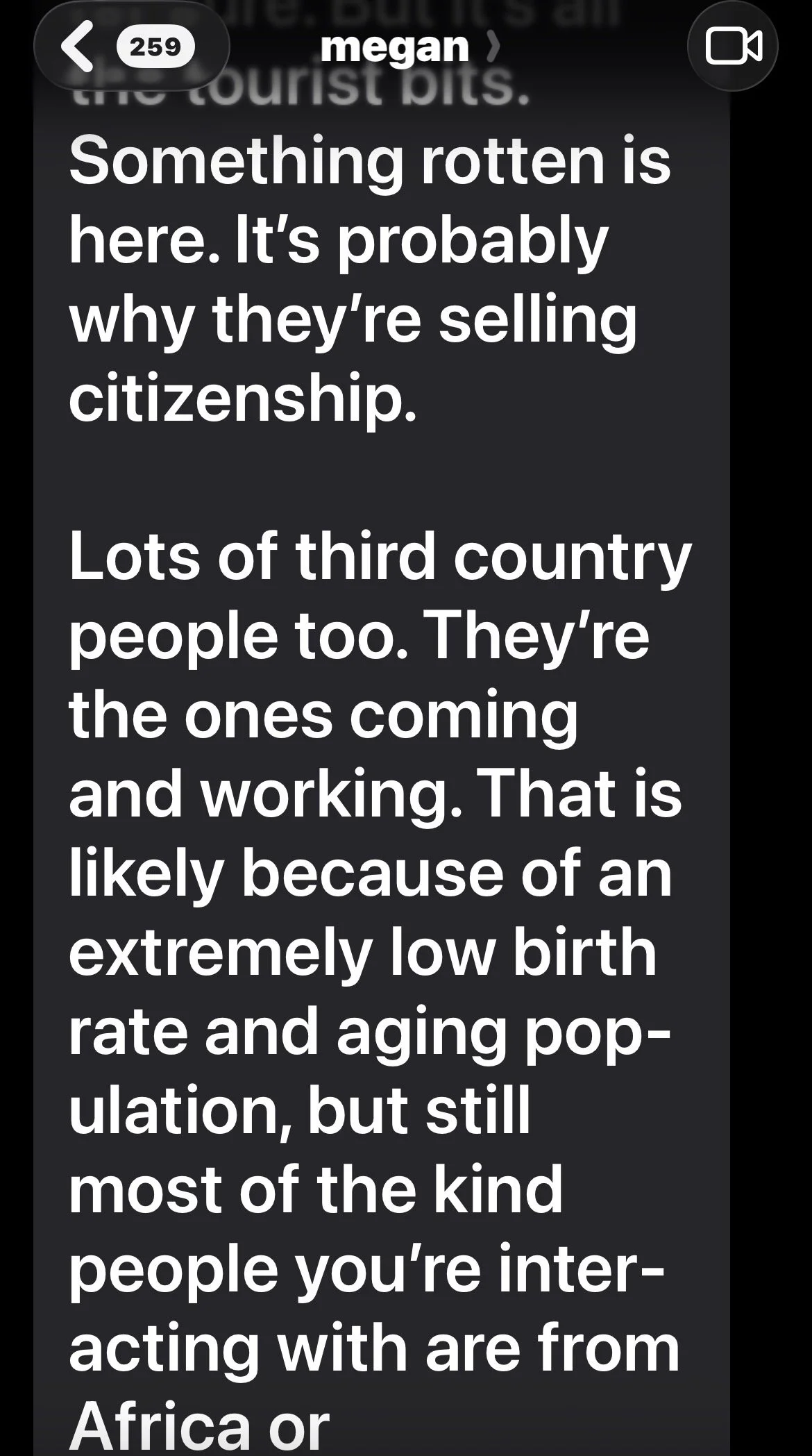
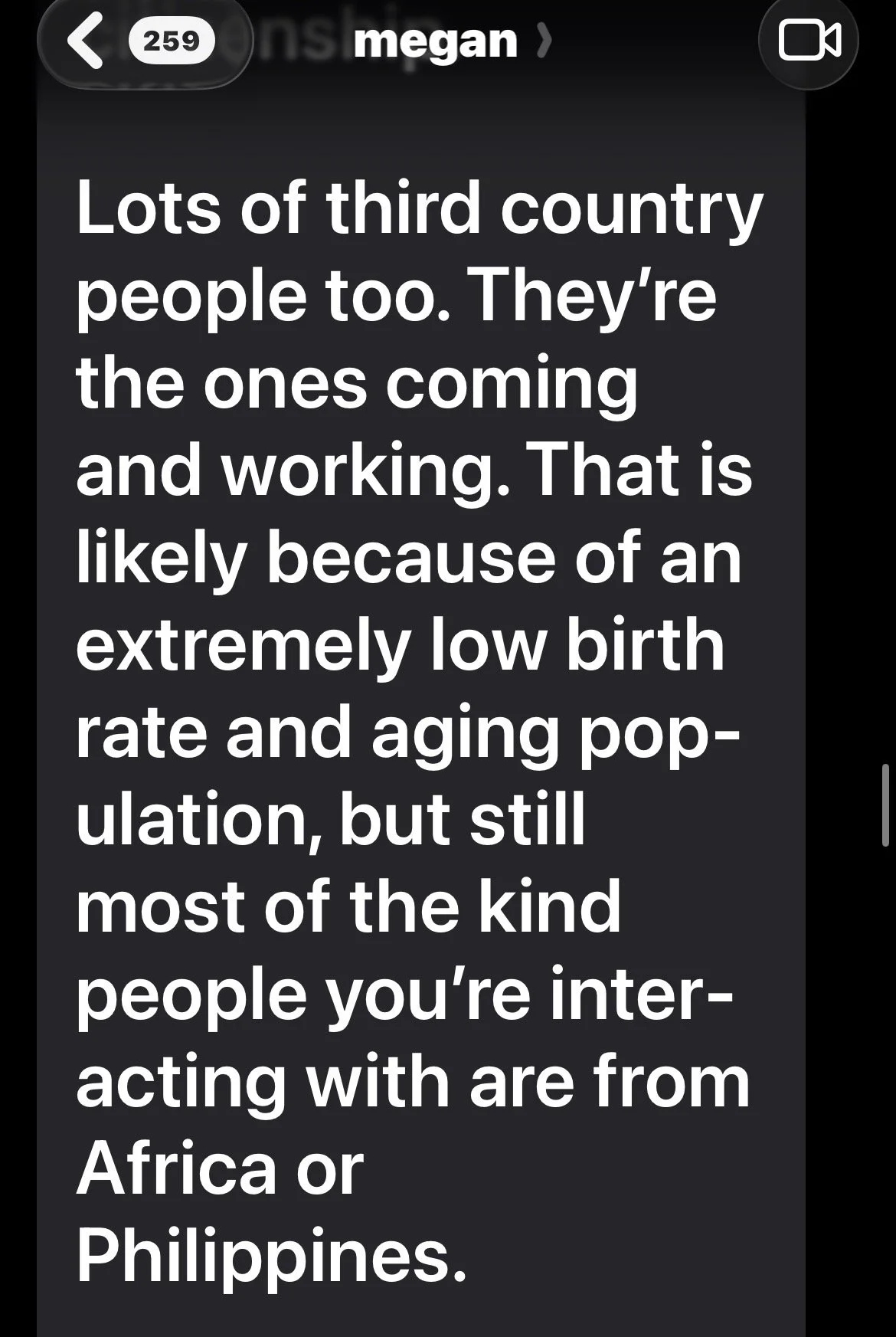
Years later, in a different placement arranged through Morgan & Mallet, I received a message from Megan Platts, the person employing me. She wrote:
“You Jewish? Is that a dumb question? (Cause I hate Jews) Or are you just Old Testament junkies” again, not paraphrasing.
I had worked with Jewish families, celebrated holidays with them, lit menorahs, stood for prayers, and even attended a friend's bat mitzvah as a child (Not just the big party, but the ceremony at Synegogue as well) But none of that should matter to whether I could recognize the ugliness of that message. I should not have to demonstrate my familiarity with another community's traditions to establish that antisemitism is unacceptable.
These were different households, different people, and different circumstances. I'm not telling these stories to suggest they were identical. I'm telling them because they reveal something about the position domestic workers occupy: we can be trusted with the most precious parts of a family's life and still find ourselves navigating prejudice, disrespect, or mistreatment in the very place where we work.
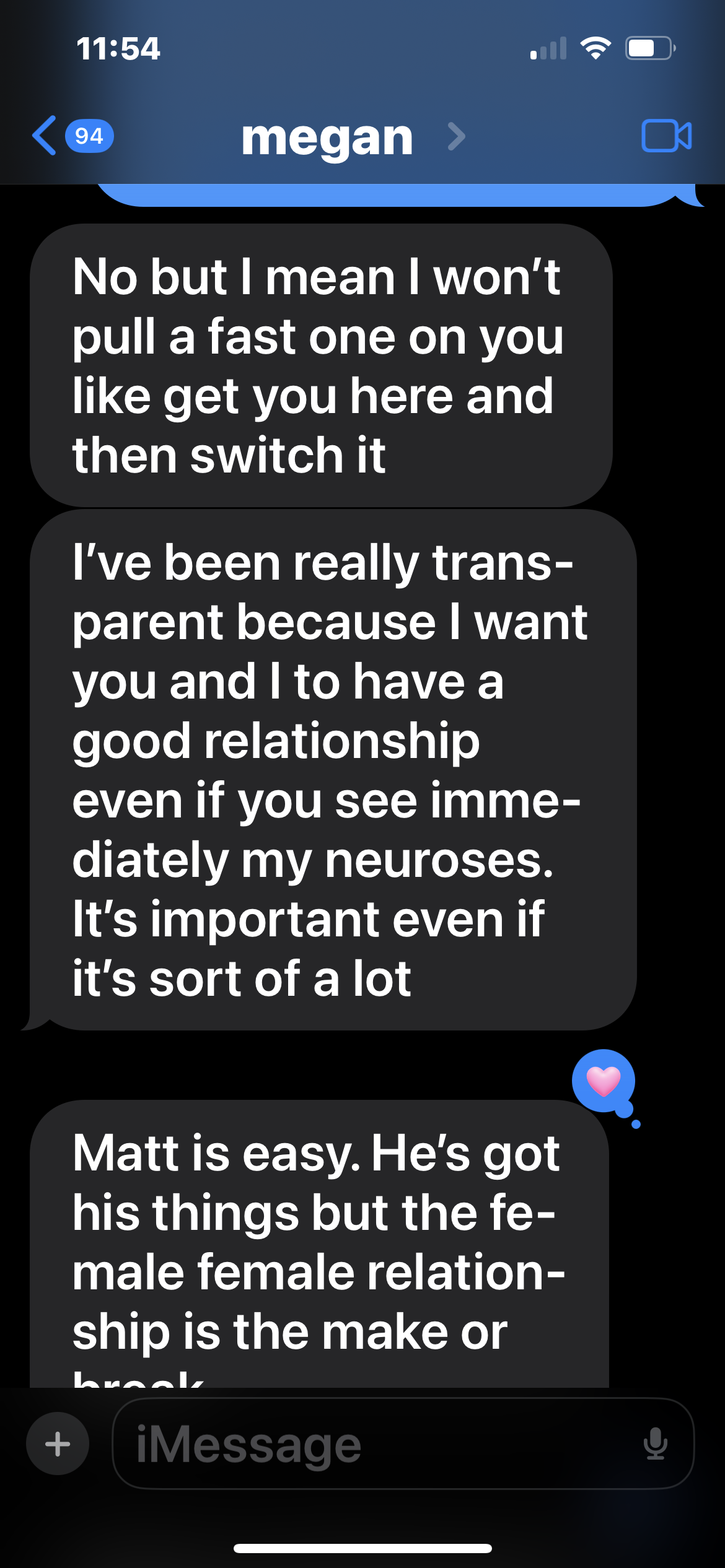
Before the placement, Megan had also sent me a message saying she would not “pull a fast one” by bringing me there and then changing the arrangement. She explained that she was being transparent because she wanted us to have a good relationship, even if I saw her “neuroses” immediately.
I took her at her word. I approached the situation with compassion. She was postpartum, had two children under two, and was navigating international travel with a young family. I have experience supporting parents during the postpartum period. I understand that those early months can be exhausting and disorienting. I know that people can be overwhelmed, fragmented, reeling from the adjustments of shifting from partner to parent, and still deserve patience, care, and understanding.
I tried to extend that understanding.
But compassion is not a contract to endure mistreatment. Understanding another person's circumstances does not require abandoning your own boundaries. And a worker's ability to empathize with an employer does not mean the employer is entitled to her silence.
And I'm not sharing Megan's words to suggest that a person's disclosed struggles make them unfit to employ someone, or that an agency should be able to predict every conflict before a placement begins. No screening process can guarantee how a person will behave behind closed doors.
That is precisely the point.
You cannot guarantee that nothing will go wrong. You can establish what happens when it does.
My experience with this international placement raised questions that extend beyond one employer's behavior. I was left without a return ticket in Malta and had to navigate circumstances in which my employment, accommodation, travel, and ability to leave were intertwined. When an agency facilitates an international, live-in placement, what happens when the arrangement breaks down? What support can the worker actually access? What responsibility does the agency accept after the introduction has been made?
And I'm not claiming that an agency can prevent every harmful act, or that I know what every person involved knew at every point. I'm asking what safeguards exist when prevention fails.
Because nannies know exactly how this works.
We know that speaking up can jeopardize our income, our housing, our relationship with the family, and our relationship with the agency that placed us. In international placements, the stakes can be even higher. We may be unfamiliar with local laws, unsure where to seek help, dependent on the employer for accommodation, or trying to navigate an unfamiliar country without a reliable way home.
We know that the person we need to report may be the person who signs our paycheck, controls our living arrangements, and has the established relationship with the agency.
And we know that reporting mistreatment does not guarantee that anyone will help us.
So we calculate. We weigh our words. We manage our reactions. We try to understand the family, protect the children from adult conflict, and remain professional in circumstances where our own dignity is being disregarded. Sometimes we say nothing because we have decided that silence is safer than finding out what happens when we speak.
From the outside, that silence can be mistaken for acceptance. Our continued work can be mistaken for proof that the situation is tolerable. Neither interpretation accounts for what it costs a worker to leave, or what she risks by staying.
Sometimes, 'professionalism' is what a worker uses to survive a situation she has no safe way to challenge.
The industry benefits from that professionalism. The household continues to function. The children still receive care. The schedule is covered. The worker maintains discretion.
But the fact that she has managed to keep working does not mean she has been protected.
I've been documenting my work for years. I've shared the places I've taken children, the projects we've made, the things they've learned, and the small moments that make this profession meaningful to me. I've never needed to turn every part of my work into a public performance to know that it matters.
I remember taking Stuart to the Chicago Cultural Center to see Hebru Brantley's Parade Day Rain. I remember the photograph I shared, the fact that Hebru liked it, and the cake I later made with his permission to use the painting as inspiration. Those memories matter to me because they reflect how I approach my work: with curiosity, creativity, and a desire to give children experiences that expand their worlds.
I don't share that to prove that I'm an exceptional nanny. I share it because this is what the work looks like when you're invested in it. You bring pieces of yourself into a child's life. You remember what they love. You make things with them. You introduce them to art, history, food, music, and ideas. You care for them day after day, including in the absence of their parents.
That care can be genuine. The relationship can be meaningful. And none of it guarantees that the person providing the care will be treated well.
I think about the women who came before us, especially Black women whose labor made other people's lives possible while their own needs were dismissed. I think about Dorothy Bolden, who organized domestic workers and understood that the people doing this work needed more than appreciation. They needed power, protections, and the ability to demand better conditions.
There's a reason the history of domestic work in this country can't be separated from the history of Black women's labor. Domestic workers have long been expected to enter private homes, care for other people's families, and perform intimate labor while being denied the protections and recognition afforded to workers in other settings.
The language may have changed. The industry may look different. But the fundamental tension remains: the work is essential, while the worker's ability to insist on fair and safe conditions is often treated as negotiable.
We can't honor the women who fought for dignity in domestic work while continuing to treat the conditions under which that work happens as matters of private preference.
A family may choose its childcare philosophy. It may establish household routines and expectations. It may seek a nanny whose experience, skills, and values align with its needs.
But it should not be able to define professionalism as a worker's willingness to tolerate mistreatment. And an agency should not be able to treat a successful introduction as the end of its responsibility to the working relationship it helped create.
I'm not asking agencies to guarantee that every household will be safe, that every employer will behave appropriately, or that every conflict can be resolved. I am asking what responsibility they accept when a placement becomes unsafe, exploitative, or otherwise untenable.
What can a worker report? Who is responsible for responding? What happens when the employer is the source of the problem? What happens when the worker cannot safely remain in the home? What options exist when she needs to leave, recover her belongings, secure alternative accommodation, or get home?
And how do we distinguish an agency that merely places workers from one that takes their safety and autonomy seriously?
These questions are the reason I am developing the Safety & Autonomy Standards™.
Not because standards can see inside every home. Not because a checklist can eliminate every risk. And not because domestic workers need another lecture about communication, boundaries, self-advocacy, or how to be more 'professional'.
Standards matter because they establish expectations beyond an individual family's preferences. They make it possible to ask what responsible practice looks like before a crisis, during one, and after a worker raises a concern. They create a basis for accountability that does not depend entirely on whether an individual employer is sympathetic, an agency is willing to intervene, or a worker can afford to walk away.
A worker should not have to rely on the kindness of the person who holds power over her. She should not have to gamble her livelihood to discover whether anyone will take her concerns seriously. And she should not have to endure a harmful situation in silence simply because the work takes place in a private home.
What do we owe the women whose labor made our lives possible, and what should the women who come after us be able to expect?
That is the question I keep returning to. It connects the history of domestic work to the industry as it exists today. It connects the women who organized before us to the nannies working behind closed doors now. And it connects my own experiences to something larger than any one family, employer, or agency.
I have been asking for understanding, not empathy.
I don't need people to feel sorry for me. I need them to recognize a structural problem and consider what it would take to change it. I need us to stop confusing a worker's ability to endure a situation with evidence that the situation is acceptable. I need us to stop treating her silence as proof that she is safe.
I want us to stop mistaking a good placement for a protected worker.
The house may belong to the family. The work still belongs to a profession. And that profession deserves standards.
Placement is not protection. Affection is not accountability. Professionalism cannot be a one-way street.
That's what I've been trying to explain.
That's why the standards have to exist.